What is the health problem?
Maternity care for mothers and babies in the UK is of high quality overall, but could and should be more consistent and provide greater equity of outcomes. Around 8% of babies in the UK are born prematurely - about 60,000 babies each year. This is higher than many countries in Europe. Babies born prematurely may need special care, are more likely to have developmental problems early in their life, and to develop health problems as adults.
There are also major disparities in maternal health outcomes for women belonging to ethnic minorities and those living in disadvantaged areas. For example, Black women in the UK have higher maternal death rates than white women, and a higher risk of miscarriage, giving birth prematurely and stillbirth.
Establishing the evidence on the benefits of alternative models of maternity care
Researchers in the ARC’s maternity and perinatal mental health theme have been leading research to explore how health outcomes for women and babies at risk of complications can be improved.
In 2016, Professor Jane Sandall, the ARC’s maternity and perinatal mental health theme lead, and professor of women’s health & social sciences, King’s College London, led an influential international review into the evidence on models of midwifery continuity of care. These models involve the same midwife or small team of midwives providing care for a woman during her pregnancy, birth, and after birth, helping to build a continuous caring relationship between the woman and her midwives.
The review (Cochrane, April 2016) showed that women who had midwifery continuity of care were:
- 19% less likely to lose their baby before 24 weeks
- 24% less likely to have a premature baby, and
- 16% less likely to lose their baby overall (combined reduction in fetal loss and neonatal death).
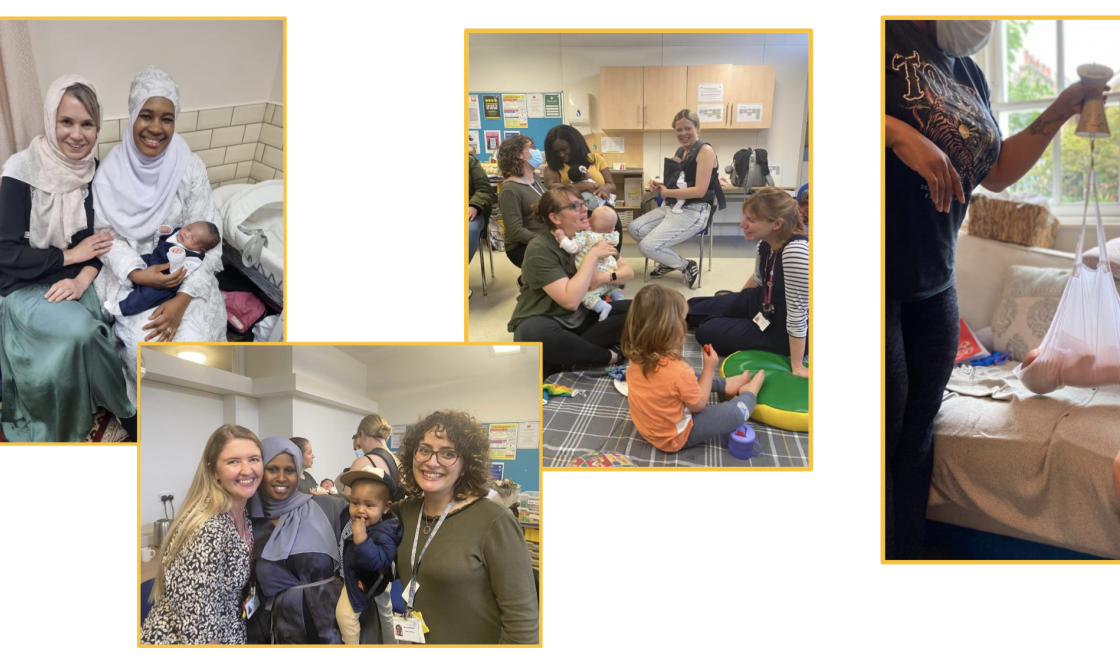
This work has had significant impact on health policy. At the international level, it informed the WHO’s guidance on pregnancy and childbirth care. At the national level, it informed NHS England’s plans announced in March 2018 to introduce continuity of midwife care for most women in England by 2021. Models of midwifery continuity of care are now recommended in international guidance and are at the heart of maternity policy in the UK (one such model, based in Lambeth, is pictured below).
What has been the impact?
- The ARC’s maternity research has been cited widely in policy, including in the Department for Health and Social Care’s strategy ‘Safer Maternity Care’ (December 2017), NICE intrapartum care guidance (2017), the World Health Organization’s (WHO) antenatal guidance (2016) Transitioning to midwifery models of care: global position paper (2024) Implementation guidance on transitioning to midwifery models of care (2025) and ,
- The ARC’s systematic review of midwife continuity of care model (updated 2024) was cited in the NHS Long Term Plan and informed NHS England’s report: Saving Babies Lives Care Bundle version 2, providing evidence for the benefits of midwifery-led continuity of carer for women, particularly those from Black, Asian and minority ethnic communities living in areas of high social disadvantage.
- The ARC's research on specialist midwife continuity models of maternity care for women with social risk factors has been cited in the NHS Equity and Equality guidance for local maternity systems, NHS Implementing Better Births strategy, Royal College of Midwives position statements on midwifery continuity of carer and women with severe and multiple disadvantage, and the NHS Race and Health Observatory’s review of ethnic inequalities in healthcare.
Since then, the ARC’s researchers have been aiming to better understand the possible benefits of models of maternity care that emphasise the quality and continuity of caring relationships for diverse groups of women, including women at risk of preterm birth, women living with social risk factors, and women belonging to ethnic minorities or living in disadvantaged areas of south London.